
The government on Thursday tabled the Digital Personal Data Protection Bill 2023 in the Lok Sabha with an aim to protect the privacy of Indian citizens, while proposing a penalty of up to Rs 250 crore on entities for misusing or failing to protect digital data of individuals.

While sale of residential properties increased only marginally despite plethora of steps taken by the government through the year, office space leasing rose 40 per cent to touch an all-time high of 46.5 million sq ft -- a trend that drew investors to lap up India's first Real Estate Investment Trust at an issue size of nearly Rs 5,000 crore.

'Crony capitalism will gain due to these Acts.'

The government will come out with proposed modalities and terms of references for setting up grievance appellate committees to address social media users' complaints in the next 10-12 days, and expects the panel to be in place by November 30, Union Minister Rajeev Chandrasekhar said on Tuesday.

Says licensing of new banks should be a continuous process instead of the current stop-go system

The decision to do away with Rs 500 and Rs 1,000 notes accelerated the slowdown in economic activity with growth averaging 6.8 per cent in the seven quarters after it, as against an average of 8 per cent in the six quarters preceding it, says former chief economic advisor Arvind Subramanian.

Jio's disruptive strategy, including free voice services and data at throwaway rates, apart from offering all services free for six months, triggered a consolidation in the telecom sector.

As economic policy making moves from pragmatism to populism, the bulls begin to make way for cautious optimists.

The infra-major going belly up cracked open some major flaws in the system - the most evident being weak corporate governance and how layers of corporate structures could be formed adding to the opaqueness of the group.

'The government has to stop trying to fix things for lenders, projects, homeowners and developers and think instead about how to fix the market for houses,' says Mihir S Sharma.

Mukesh Ambani's Jio, high debt and some bad decisions drove RCom to its grave.

The Tamil Nadu government had, on May 28, ordered the state pollution control board to seal and "permanently" close the mining group's copper plant following violent protests over pollution concerns.

'The 5.7% growth in the April-June period is an aberration because of GST.' 'Business activity in the last 15 days of the quarter was minimal or zero.'

Almost 2,000 companies whose private provident and pension funds have invested in non-convertible debentures of IL&FS group firms are staring at the prospect of booking losses to the tune of Rs 9,000 crore or more if the interest income is added.
.jpg)
The government is likely to file an appeal against the Cairn arbitration award contesting its sovereign rights to tax, sources said.
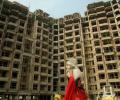
A decline in the real estate sector, rising debt and the company's alleged involvement in 2G scam caused damage to the business and its image.

In the atmosphere created by the reaction to the PNB fraud and RBI's resolution framework, "don't lend, don't resolve" is bound to become the bankers' new mantra, says T T Ram Mohan.

'When there is unlocking, there is demand revival.' 'This is going to be the main growth engine in this kind of an economic scenario.'

'If you ask India's finest business leaders, they now tell you -- in whispers, of course -- that the mood has never been so glum after 1991,' says Shekhar Gupta.

GST stabilisation, DTC implementation and banking reforms are crucial for sustaining high growth for a long period, says Rashesh Shah.

A key hindrance to a faster turnaround of these banks is the slow progress in the resolution of legacy bad loans and the need to build up provisions against those assets.

While passing the scrutiny of courts is a tough challenge, with eight proposed amendments to the insolvency law, the government has sought to turn the focus back on at least some of the functions of the bankruptcy law.

A bench of Chief Justice Ranjan Gogoi and Justice S K Kaul said the case will be heard on January 8.

Bankers seem to be pleased with the government for keeping its promise of not interfering in operational matters, but are apprehensive about the intense scrutiny of their functioning.

The trio, 'twin shocks' of demonetisation and GST, 'twin balance sheet' problem that has been weakening India's banking system and the 'twin deficit' problem will continue to challenge economic management and performance in the year ahead, says Shankar Acharya.

Public purpose is not defined in any treaty that India has signed.

Concluding the three-part series, Paranjoy Guha Thakurta says that the black money law is likely to fail because of the ineptness of India's investigative and enforcement agencies.
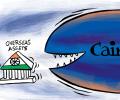
Cairn Energy has threatened the Indian government that it is looking at executing the favourable $1.2 billion international tribunal award in the retrospective taxation case by seizing India's overseas assets.

A French court has ordered freezing of an Indian government property in Paris on a plea by Devas shareholders who are seeking to enforce a USD 1.3 billion arbitration award over a cancelled satellite contract, according to the court order copy.

With real estate valuations falling and other deals coming unstuck, the current management's improved target faces significant challenges.

Russian firms expand their footprint in India. And take bigger steps to do business with India's private sector.
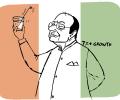
'The attempt to build a negative narrative about India's economic performance is disingenuous.' 'For the investors as well as the targeted beneficiaries of welfare schemes, the ground reality is very different,' argues Rajiv Kumar, vice-chairman, NITI Aayog.

'The significance and timing of the PM's start of the campaign journey from Silchar is a clear message that the Barak valley is a priority in his scheme of things,' notes Subimal Bhattacharjee.

McDonald's problems couldn't have surfaced at a worse time. Cut-throat competition, rapid expansion and a slowdown in consumer spending in the wake of demonetisation have seriously dented the overall quick-service restaurant business.

Reflective of the conglomerate's ambition to turn into a consumer-driven business, most of the 33 acquisitions in the last financial year were for its digital, retail, or related verticals.

Heading to the third year, will Urjit Patel be busy firefighting a currency crisis? Almost no governor of the RBI managed to evade it and Patel perhaps knows it.
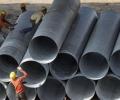
The Insolvency and Bankruptcy Code (IBC) got a leg-up with Tata Steel's acquisition of Bhushan Steel, the first big case to be resolved. Tata Steel CEO & MD T V Narendran tells Ishita Ayan Dutt how this deal moved so quickly while others are still mired in controversies.

'NSE has thousands of employees. It is their institution. So it's a dear family.' 'One should not hurt the morale of these people.'

Arundhati Bhattacharya talks about SBI's strategies, its aim to be among the top 30 banks globally, and stressed assets resolution.

The levy of retrospective tax on the UK's Cairn Energy Plc is a tale of bizarre twists and turns that saw its attached shares being sold in May 2018 amid the passing of the baton from a full-time finance minister to interim one and the talks at the highest level to resolve the dispute, to claims that levy of back taxes was a result of an investigation into Panama Papers leak. The government late last month refunded about Rs 7,900 crore it had collected from selling residual shares of the British firm in its erstwhile India unit, seizing dividend and withholding tax refunds, to settle an eight-year-old dispute that had tarred the country's reputation as an investment destination. But, this did not come about easily. For seven years, the establishment vehemently justified in courts and outside seeking of Rs 10,247 crore in back taxes plus interest and penalty from a firm that gave India its biggest onshore oil discovery.
